International Humanitarian Kerri Kennedy on Building Courage
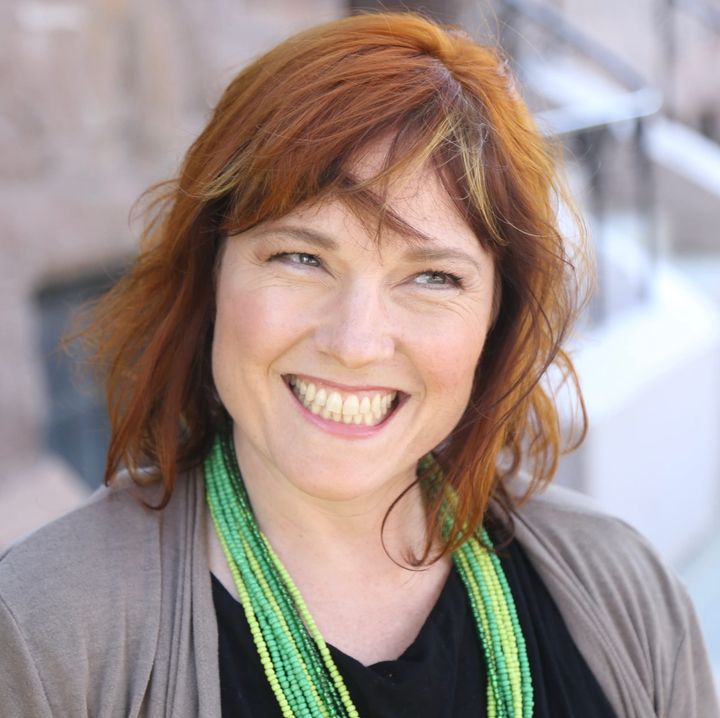
Kerri Kennedy knows a thing or two about courage. As the Associate General Secretary for International Programs at the nonprofit, Nobel-Peace-Prize-winning American Friends Service Committee, Kerri Kennedy oversees peacebuilding, humanitarian, and human-rights programs in some of the world's most complex and dangerous environments.
Kennedy will present her TED Talk, “The Courage Architecture” at our TEDxAsbury Park event, UNLABEL INTELLIGENCE, on October 7 at the Triumph Brewery Stage in Red Bank. She recently spoke with TEDxAsburyPark writer Suzanne Pisano about how it’s possible to build courage individually, collectively, and institutionally when democratic values and human rights are under threat.
Pisano: You recently mentioned in your inaugural Substack piece that the events of 9/11 inspired you to pursue international peacebuilding. You were about to enter Rikers Island for a workshop when the prison locked down! Tell us about that.
Kennedy: Yes, my brother was in the North Tower, and I knew he was on a high floor. I'm sure you know, all the phone lines weren't working. And the only way I got back into New York is because we were with a detective, and he was able to get through all the stops. So I'm driving with this detective across the Brooklyn Bridge as people are coming, just in shock and covered in white soot. I had been in the Peace Corps, and I had worked overseas, and I'd been in disaster zones. I was in Fiji during an AIDS crisis. I traveled to West Africa. So this wasn't my first exposure to a disaster, but it was the most stunning of my entire career. The stillness of people walking across the bridge was something I'll never forget. And then I was running around on Ground Zero, trying to help, trying to find my brother. I saw bodies fall. I saw the buildings collapse. That was just a thunderbolt moment in my life, and I said, I have to understand why anybody would commit an act of political violence. I really need to understand this and interrupt it. How do we stop it? [Kennedy later learned her brother had survived.]
Pisano: And you took decisive action to answer that question.
Kennedy: I decided to go to graduate school at American University. I studied international atrocity prevention, peacebuilding, and from that point on, I continued in my career, and have worked in 60 plus countries. Right after 9/11, I also was working in Afghanistan, and I was helping women get elected to political office. There was a lot of excitement around their democracy. And then we started the war in Afghanistan. And now, 25 years since 9/11, five years since we withdrew from Afghanistan, we're less safe today than we were 25 years ago. We're at a historic low in our democracy. We are at a historic high in authoritarianism. So I've spent the past 25 years working to protect human rights, build peace, understand conflict, and understand what people, communities, and institutions need to do to protect democracy and to build peace.
Pisano: Does your TED Talk theme of Courage Architecture come out of that work?
Kennedy: Yes. It comes from my long-lived experience as a peace builder, working with human rights defenders, and seeing what it takes to hold democracy. What it takes for us to build courage with it. It's a multi-skilled, multi-tiered system, because to make the world a better place, we all, as individuals, need to go towards courageous action. We need to do the thing that challenges us and makes us be a little bit uncomfortable but also where we find joy. We make the world a better place by doing that individually. And the more we do it, the more we create this practice and this power of courage that is collective and that builds on each other.
Pisano: Can you give us an example of that collective courage in a community?
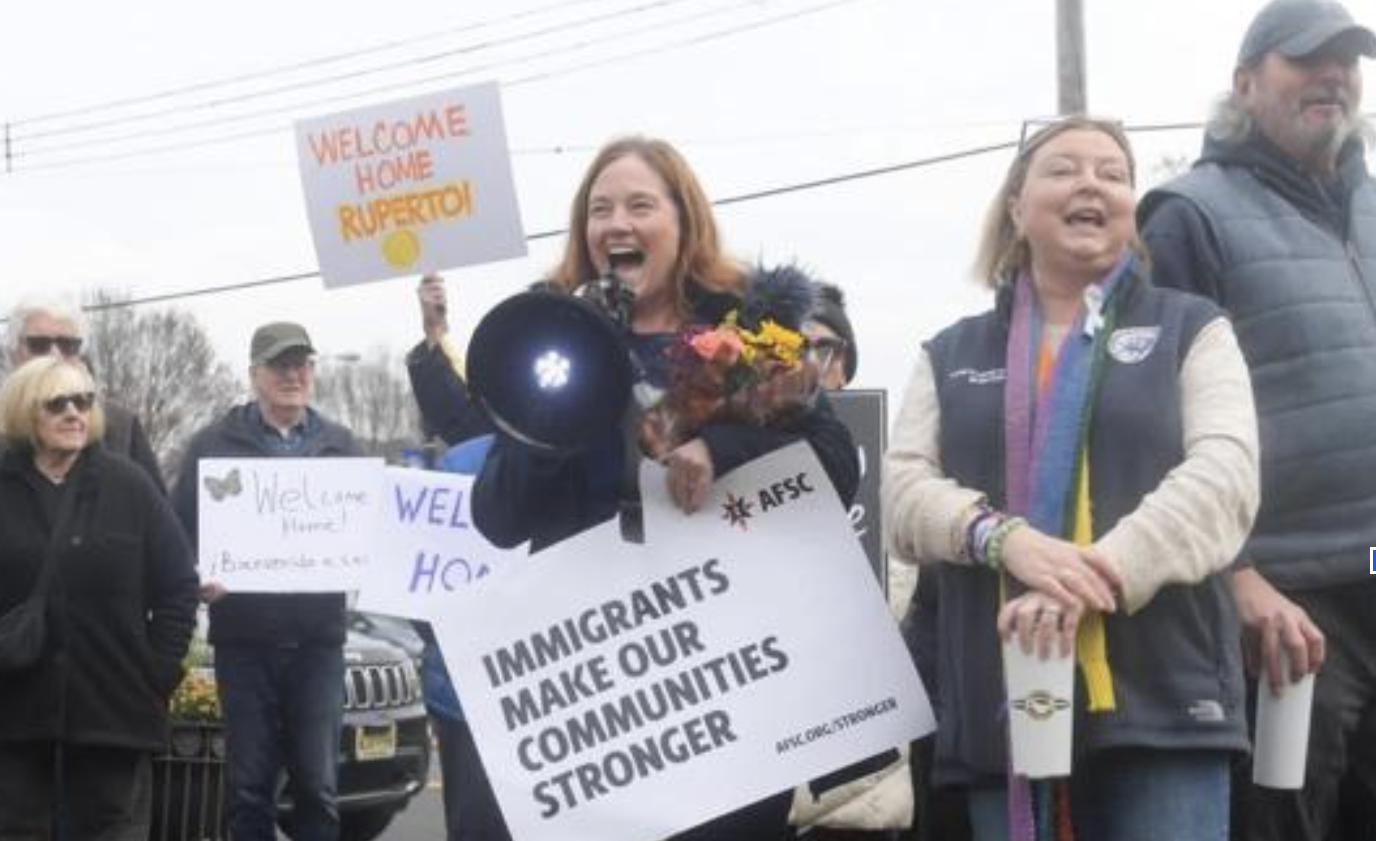
Kennedy: Last year, a local chef in town had been arrested by ICE. Neighbors called me because they know I know how to organize in these situations. What is beautiful about Atlantic Highlands and Highlands and the larger communities that this situation crossed…it wasn’t just Democrats or Republicans. Everybody came out for this family, this loving family who are a wonderful asset to our community. As soon as they called me, I started organizing vigils. I wrote press releases. And people came out. Our mayor did a GoFundMe. People were looking for that collective energy and ideas of what to do. There is a playbook of what works in Liberia and in Gaza where I've worked, and in Afghanistan. It also works in the United States and Atlantic Highlands. You have to localize it, but they’re the same actions and the same playbook. And who would think we would ever need that here? But we do. Humans are humans. Even though we have been founded on these amazing principles and ideals, we all have the potential to not live up to them. Just as courage is a practice, democracy is a practice. It takes all of us to show up.
Pisano: That situation had such a positive outcome. Unfortunately, there are so many similar things happening right now, it’s exhausting.
Kennedy: So the courage architecture is really this. When I speak around the world, and when I speak in the United States, people say, what do I do? I'm so overwhelmed. And we know chaos is the strategy, right? Biologically, it causes us inertia, paralysis, feeling overwhelmed. The more we understand biologically how it affects our body, the more we can overcome it. So, this is what I talk about—how we understand what's happening at a political and a biological level, and how we step into overcoming it. To practice the power individually, practice it collectively, and then be ready, institutionally, whether you lead an organization or a school, to be able to take protective actions in advance in case we do see more democratic decline.
Pisano: Taking those steps individually can be difficult for some people. They may see others more willing to put themselves out there than they are and think, “That person has more courage than I do.”
Kennedy: Nope. And that's what I want to dismantle. It's a practice. Just like yoga. Just like weightlifting, just like fitness. It's the same with intelligence, with the idea of unlabeling intelligence. People, we all have gifts. We all have courage. We all have our potential. And this is a way to unpack, why do I freeze, and how do I overcome that? Because the more you understand it and take a step towards courageous action, the more it grows in you. Everyone has that potential.
Member discussion: